
Did you know millions of vehicles are thrown away each year? This adds to pollution and waste. Junk cars can harm the soil and air.
Eco-friendly junk car disposal is key to fixing these problems. We know how important it is to dispose of junk cars right. Recycling them saves resources and cuts down on landfill use.
Key Takeaways
- Understand the environmental risks associated with junk cars.
- Learn the benefits of eco-friendly junk car disposal.
- Discover how to sell your junk car quickly and ethically.
- Explore the importance of recycling junk cars.
- Find out how we can provide a hassle-free experience for selling your junk car.
Understanding Junk Cars and Their Impact
Old cars that can’t be used anymore are called junk cars. They pose a big problem for the environment. We must understand their impact to solve the issue.
What is a Junk Car?
A junk car is an old vehicle that doesn’t work or can’t be fixed. They are often seen as scrap metal, meant for recycling or getting rid of. The state of a junk car varies, but it usually has a lot of damage or mechanical issues.
Common Causes of Junk Cars
Many things can make a car a junk car. Common reasons include:
- Accidents that cause a lot of damage
- Mechanical failure from wear and tear or lack of care
- Old technology or models that are no longer supported
These reasons make a car unusable or too expensive to fix.
The Lifecycle of a Junk Car
The life of a junk car goes through several stages, from being thrown away to being recycled or scrapped. Good recycling practices can greatly lessen the harm to the environment from junk car disposal. Recycling junk cars means getting parts and materials back, which cuts down on waste and the need for new materials.
Knowing how a junk car’s life goes can help us see why we need to recycle them better. This way, we can lessen the environmental harm from getting rid of junk cars.
Environmental Risks of Junk Cars
Junk cars pose many environmental risks. They can harm the environment if not disposed of properly.
Pollution from Fluids and Chemicals
Junk cars leak harmful fluids and chemicals. These include engine oil, transmission fluid, and coolant. They can pollute the soil and groundwater.
- Engine oil has heavy metals and carcinogens.
- Transmission fluid and coolant are toxic to water life.
- Fuel and chemicals can evaporate, causing air pollution.
Ecosystem Damage
Abandoned cars harm ecosystems in many ways. They attract pests and rodents, spreading diseases. The rusting metal also contaminates the soil.
It’s important to recycle junk cars properly. This helps avoid ecosystem damage. Using green solutions for junk car removal is key.
The Role of Toxic Materials
Junk cars have toxic materials like lead-acid batteries, mercury switches, and asbestos. If not disposed of right, they’re harmful to the environment and health.
- Lead from batteries can pollute soil and water.
- Mercury from switches can vaporize, causing air pollution.
- Asbestos can lead to respiratory problems if inhaled.
Recycling junk cars manages these toxic materials well. It reduces the carbon footprint of their disposal.
Recycling Junk Cars: A Green Solution
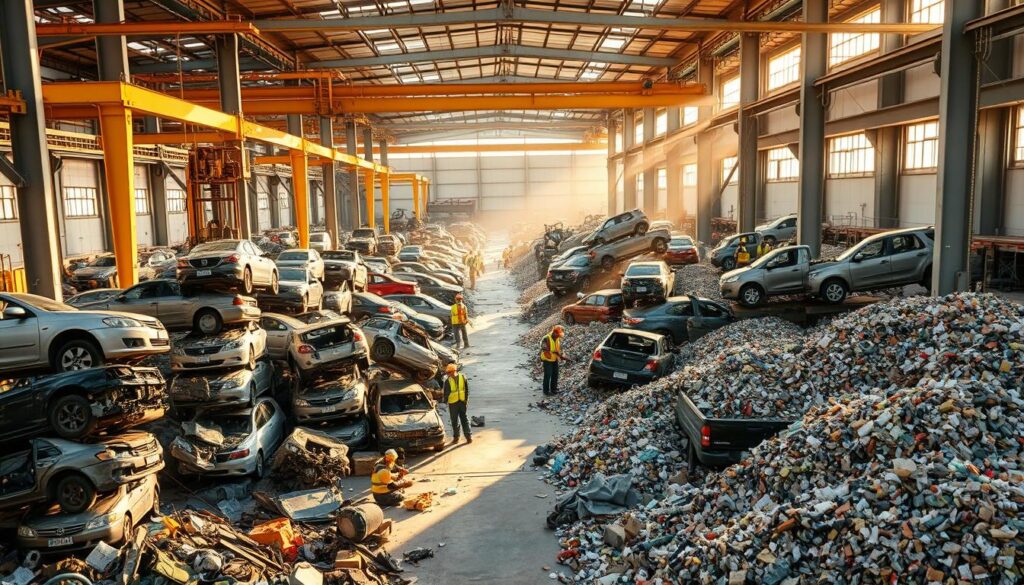
Recycling junk cars is good for the planet. It helps us use resources wisely and cuts down on waste. We’ll look at why recycling is better than throwing cars away, how it works, and who does it right.
Benefits of Recycling
Recycling junk cars saves natural resources. It reuses materials like steel, aluminum, and copper. It also cuts down on waste and pollution from making new cars.
- Conservation of natural resources
- Reduction in landfill waste
- Lower carbon footprint
Steps in the Recycling Process
The recycling process starts with checking the car’s condition. Then, fluids and hazardous materials are safely removed. The car is taken apart, and parts are sold. The metal is crushed and recycled.
- Vehicle assessment
- Drainage of fluids and hazardous materials
- Dismantling and part removal
- Crushing and processing of metal
Organizations That Recycle Cars
Many groups focus on recycling junk cars. They work with local communities and auto shops. Supporting them helps our planet.
Look for local salvage yards and national recycling programs. They make it easy and right to get rid of old cars. This promotes green practices in our area.
Automotive Conservation and Sustainability
Junk cars are a big problem for the environment, but we can make a difference. The car industry is changing, and we need to deal with junk cars’ impact on our planet.
How Junk Cars Affect Resource Conservation
Junk cars can waste a lot of resources if not recycled. The metals and plastics in cars can be reused, saving raw materials. Recycling junk cars helps save resources and cuts down on mining and processing harm.
Key resources conserved through junk car recycling include:
- Metals such as steel and aluminum
- Plastics and other synthetic materials
- Rare earth metals used in vehicle electronics
The Importance of Sustainable Practices
Sustainable practices are key in the car industry to lessen environmental harm. This means recycling junk cars and using eco-friendly ways to make cars. It also means making cars that use less fuel. By going green, we can make the industry cleaner and healthier.
Benefits of sustainable practices in the automotive industry:
- Reduced greenhouse gas emissions
- Conservation of natural resources
- Minimized waste and pollution
Enhancing Fuel Efficiency in New Cars
Improving fuel efficiency in new cars is a big step towards a greener car industry. By making cars that use less fuel, we cut down on fossil fuel use and emissions. This is good for the planet and saves money on gas.
Car makers are using new tech like hybrid engines and electric cars to improve fuel efficiency. We can help by choosing cars that use less gas. This supports the industry’s move towards better fuel efficiency.
Innovations in Junk Car Management
The way we manage junk cars is changing for the better. New technology is making our practices greener.
Advances in Recycling Technology
Recycling junk cars has gotten a lot better. Now, we can recycle more parts of vehicles thanks to new machines and methods. This cuts down on waste and helps the planet.
- Improved shredding techniques to process vehicles more efficiently.
- Enhanced material separation technologies to maximize recyclable materials.
- Innovative methods for recycling complex vehicle parts.
Eco-Friendly Disposal Methods
New ways to dispose of junk cars are also emerging. These methods aim to reduce harm to the environment. They focus on safely getting rid of harmful materials and lowering carbon emissions.
- Draining and safe disposal of fluids to prevent environmental contamination.
- Proper handling and recycling of hazardous materials like batteries and tires.
- Environmentally responsible dismantling practices to maximize reuse and recycling.
These new approaches help us lessen the harm junk cars cause. They make getting rid of old cars better for our planet.
Junk Cars’ Contribution to Climate Change
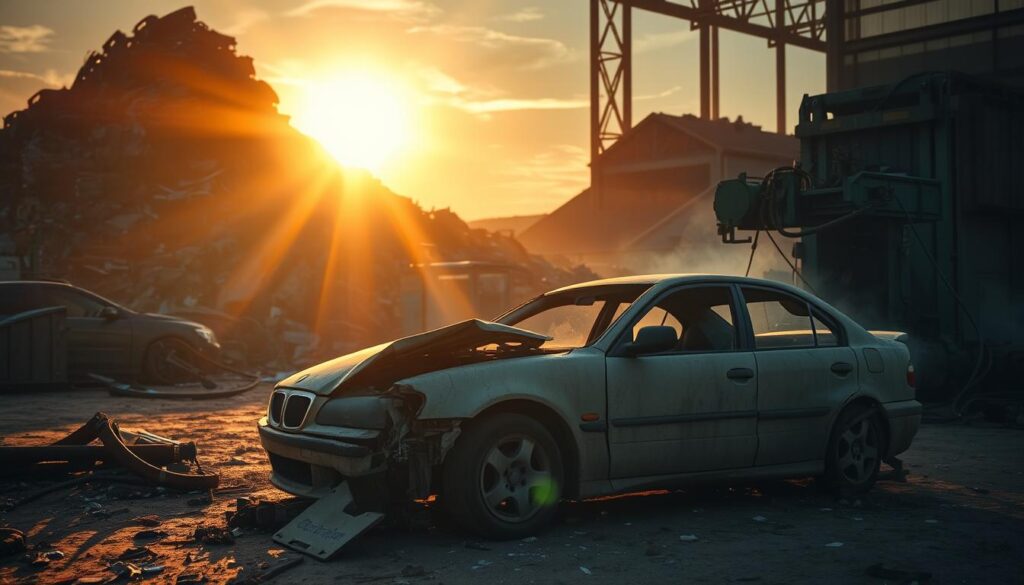
Junk cars harm the environment by releasing harmful gases and pollutants. As we face global warming, it’s key to understand junk cars’ role. They play a big part in this issue.
Junk cars are not just old cars. They harm our environment in many ways. Their effects reach far, affecting local ecosystems and global climate patterns.
Greenhouse Gas Emissions
Junk cars use a lot of fuel and release more greenhouse gases. These include carbon dioxide (CO2) and methane (CH4). These gases trap heat, leading to global warming.
Key emissions from junk cars include:
- Carbon dioxide (CO2)
- Methane (CH4)
- Nitrous oxide (N2O)
Recycling junk cars can greatly reduce these emissions. It helps reuse materials and cuts down on the need for new raw materials. This lowers the carbon footprint of making new vehicles.
The Carbon Footprint of Old Vehicles
Older cars emit more greenhouse gases and have a bigger carbon footprint. This is because of their manufacturing and the resources needed to keep them running.
Recycling junk cars helps reduce carbon footprint. It ensures materials like steel and aluminum are reused. This saves energy needed to make new parts.
By recycling junk cars, we can fight climate change. It’s a simple yet powerful way to help our environment.
Local Regulations and Junk Cars
To get rid of your junk car the right way, you need to know the local rules. These rules help make sure your car is handled in an eco-friendly way.
Understanding State and Local Laws
Every state and local area has its own rules for junk car disposal. We’ll help you grasp these laws and follow them.
Key aspects to consider:
- Registration requirements for junk cars
- Permits needed for disposal
- Environmental regulations for disposal facilities
For example, some places need a special permit to get rid of a junk car. Others have strict rules for how cars are disposed of to protect the environment.
How to Properly Dispose of a Junk Car
Getting rid of a junk car the right way involves a few steps. You’ll need to find a licensed place to take it and make sure you have all the right papers. We’ll walk you through it.
Steps to follow:
- Contact a licensed junk car disposal facility
- Gather necessary documents, such as the vehicle title and registration
- Ensure the disposal facility follows environmental regulations
By following these steps and knowing the local rules, you can make sure your junk car is disposed of the right way. This is good for the environment.
The Community Impact of Junk Cars
Abandoned vehicles harm a community’s look and safety. They make neighborhoods look bad, hurting property values and pride.
Neighborhood Aesthetics and Safety
Junk cars make neighborhoods look neglected. They can also lower property values. Plus, they can be dangers if not locked up or leaking harmful fluids.
Safety concerns include kids getting hurt from broken glass or sharp edges. Junk cars can also hide criminal activity, making neighborhoods less safe.
Economic Implications for Communities
Junk cars have big economic effects. They can lower property values and hurt local businesses. Neighborhoods with many junk cars seem less appealing, scaring off customers and investors.
- Decreased property values due to junk cars
- Potential loss of business for local companies
- Increased costs for local governments to clean up
Getting rid of junk cars helps keep neighborhoods looking good and safe. This supports local businesses and the economy.
Taking Action: What You Can Do
Now that we’ve looked at how junk cars harm the environment, it’s time to act. We can all make a big difference by choosing eco-friendly ways to get rid of junk cars. Supporting local recycling efforts is also key.
Responsible Disposal Steps
To dispose of your junk car the right way, first find local eco-friendly junk car salvage places. These places recycle cars in a way that’s good for the planet. Look for local options and pick one that follows green practices.
Community Involvement
Helping out with local recycling projects is important for a greener world. Join in on community efforts that focus on recycling cars and saving the environment. Together, we can lessen the harm junk cars cause and make our community healthier.
By doing these easy things, we can help create a better future. And we can make a positive change for our planet.