
Ignoring regular car care can cause expensive fixes and risk your safety. Did you know a well-kept car can last up to 200,000 miles or more? This shows how vital it is to stick to a car maintenance plan.
We know how key it is to take care of your car before problems start. By following easy auto care tips, you can avoid damage, cut down on breakdowns, and keep your car in top shape.
Key Takeaways
- Regular maintenance is key to a longer car life.
- Simple car care tasks can save you from big repair bills.
- Preventative care keeps your car safe and running well.
- Sticking to auto care tips lowers the chance of breakdowns.
- Good car maintenance boosts your car’s health overall.
Understanding the Importance of Auto Care
Auto care is key to your vehicle’s long life and good performance. Regular checks keep your car running smoothly and safely.
Why Regular Maintenance Matters
Regular maintenance is essential for your car’s health. It includes various checks and services to keep your car in top shape. By doing this, you avoid small problems from turning into big ones.
- Regular oil changes to keep your engine lubricated
- Tire rotations to ensure even wear and extend tire life
- Brake pad replacements to maintain stopping power
These steps greatly improve your car’s performance and life span.
The Cost of Neglecting Your Vehicle
Ignoring your car’s maintenance needs can lead to expensive repairs later. Not fixing small problems or ignoring signs of wear can cause bigger, pricier issues.
Some possible outcomes of neglect include:
- Engine failure requiring costly repairs
- Transmission problems that can lead to replacement costs
- Safety issues that can put you and others at risk
How Auto Care Affects Safety
Auto care is more than just keeping your car in good shape. It’s also about keeping you safe on the road. Proper maintenance can prevent accidents caused by car failure.
- Properly maintained brakes can prevent accidents
- Good tire condition improves handling and reduces stopping distances
- Regular checks can identify and fix safety issues early
By focusing on auto care, you protect your car and keep yourself and others safe.
Key Components of Vehicle Maintenance
To keep your vehicle in top shape, focus on key maintenance areas. Regular care ensures your car runs well and avoids expensive repairs later. Here, we’ll cover the essential parts of vehicle upkeep that every owner should know.
Engine Oil and Filter Changes
Changing engine oil and filters is vital. Engine oil keeps the engine’s parts moving smoothly and prevents overheating. As it gets dirty, it loses its effectiveness. Regular changes keep your engine healthy and efficient.
To change the oil, you’ll need to:
- Find a good spot to drain the oil
- Use a socket wrench to remove the drain plug
- Drain the oil into a pan and replace the plug
- Remove and replace the oil filter
- Put in new oil
Tire Maintenance: Pressure and Tread
Keeping tires in good shape is key for safety and performance. Check tire pressure often and make sure the tread is not too thin. Low tire pressure hurts fuel efficiency and wears out tires faster. High pressure makes the ride harsh and reduces grip.
To keep your tires in check:
- Check tire pressure monthly and before long drives
- Use a tire pressure gauge to match the recommended pressure
- Check tread depth often; replace tires when it’s less than 2/32″
Brake System Inspection
The brake system is a critical safety feature. Regular checks can spot problems early. Look at brake pad thickness and rotor condition.
When checking your brakes:
- Listen for odd noises when braking
- Feel for vibrations or pulsations when stopping
- Check brake pads and rotors for wear; replace if needed
By following these DIY car care tips, you can keep your vehicle in great shape. This reduces the need for expensive vehicle repair.
Seasonal Auto Care Tips
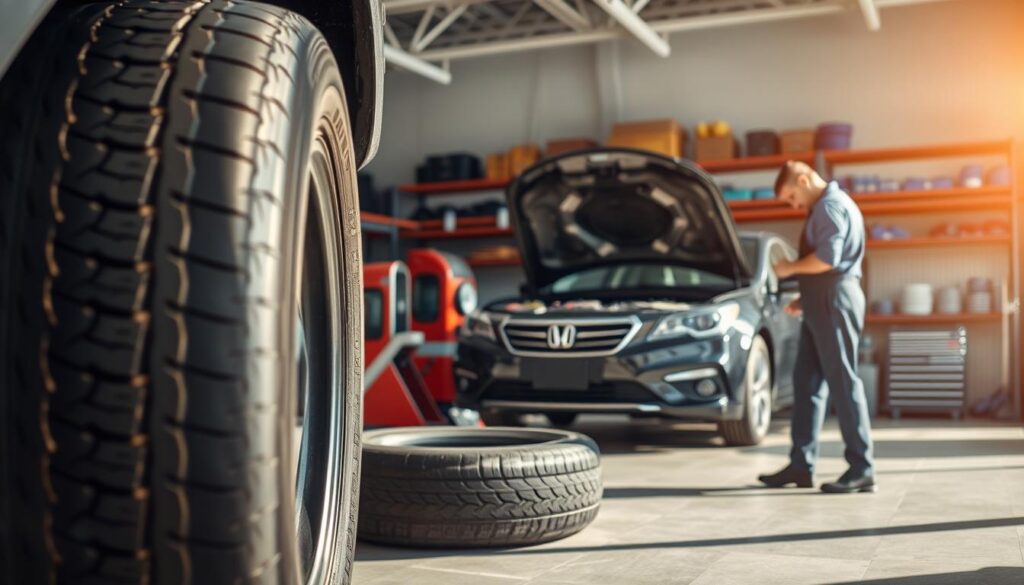
Different seasons bring different challenges for your vehicle, making seasonal auto care key. To keep your vehicle in top shape, adjust your car maintenance routine with the seasons.
Preparing Your Vehicle for Winter
Winter can be tough on vehicles. To prepare your vehicle for the cold weather, consider these steps:
- Check your battery’s health and charge level.
- Use winter tires or snow chains for better traction.
- Keep your gas tank at least half full to avoid fuel line freeze.
- Ensure your antifreeze is rated for low temperatures.
Also, keep an emergency kit in your car. Include a blanket, flashlight, and first-aid kit.
Summer Maintenance Essentials
Summer brings its own challenges, like heat and drought. To keep your vehicle running smoothly during the summer:
- Check your coolant level and condition.
- Ensure your air conditioning is working properly.
- Monitor your tire pressure, as it can increase with the temperature.
- Use sunshades or window visors to reduce interior heat.
Regularly washing your car can also protect it from the sun’s damaging rays.
Year-Round Considerations
While seasonal changes require adjustments, some car maintenance stays the same. Year-round, it’s important to:
- Regularly check your oil and fluids.
- Keep your vehicle clean, inside and out.
- Monitor your vehicle’s performance and address any issues promptly.
By following these seasonal auto care tips and maintaining a consistent car maintenance routine, you can ensure your vehicle’s longevity and performance.
At-Home Care for Your Vehicle
Keeping your car in top shape is easier than you think. With a few simple steps, you can maintain your vehicle’s health at home. This approach not only saves time but also helps avoid expensive repairs later on.
Washing and Waxing Your Car
Washing your car regularly is key to protecting its paint. Use a mild soap and avoid harsh chemicals. Wash your car every two weeks, or more often if it’s exposed to heavy dirt or salt.
- Use a soft, microfiber cloth to prevent scratching the paint.
- Dry your car thoroughly after washing to prevent water spots.
- Apply a coat of wax every few months to protect the paint and give it a glossy finish.
Cleaning the Interior Properly
Keeping the interior clean is just as important as the exterior. Regular vacuuming and dusting can make your car’s interior look new. Use a gentle cleaner on surfaces and avoid harsh chemicals that can damage upholstery or crack dashboard components.
- Vacuum all surfaces, including seats, carpets, and crevices.
- Use a microfiber cloth to dust dashboard and console areas.
- Clean any stains on upholstery promptly to prevent them from setting in.
Checking Fluid Levels
Regularly checking your car’s fluid levels is vital for its health. This includes engine oil, coolant, transmission fluid, and brake fluid. Refer to your owner’s manual for the correct locations of these reservoirs and the recommended levels.
- Check engine oil level regularly and top it off as needed.
- Ensure coolant level is at the recommended level to prevent overheating.
- Check brake fluid level to ensure your brakes are functioning properly.
When to Seek Professional Help
Keeping your vehicle in top shape is a mix of DIY care and professional help. While we can do a lot ourselves, sometimes a pro mechanic is needed.
Signs Your Vehicle Needs a Mechanic
Knowing when to call a mechanic is key. Look out for these signs:
- Unusual noises, such as grinding or squealing sounds
- Dashboard warning lights that remain on
- Decreased performance or efficiency
- Vibrations or shaking while driving
If you see these signs, get your car to a mechanic fast. This can stop small problems from turning into big ones.
Choosing the Right Auto Care Shop
Choosing the right auto care shop is important. Look for:
- Reputation and customer reviews
- Certifications and qualifications of the mechanics
- Transparency in pricing and services offered
Going to a trusted auto care shop means your car is in safe hands. It will get the right repairs and care to keep it running well.
Getting professional help when needed is key to being a responsible car owner. Knowing when to call a mechanic and picking the right shop keeps your car in top shape.
Understanding Your Owner’s Manual
The owner’s manual is more than a guide; it’s a roadmap for your vehicle’s health. It helps you keep your car running smoothly and efficiently. By following it, you ensure your vehicle gets the right maintenance.
Key Maintenance Schedules
The maintenance schedule in your owner’s manual is key. It lists the maintenance tasks and when to do them, like oil changes and tire rotations. Sticking to this schedule prevents wear and tear, reduces breakdowns, and keeps your car performing well.
- Oil Changes: Regular oil changes keep your engine healthy. Check your manual for the right oil change interval.
- Tire Rotations: Rotating your tires ensures even tread wear. This improves traction and extends your tires’ life.
- Brake Pad Replacements: Worn brake pads can reduce stopping power and increase accident risk.
Important Safety Information
Your owner’s manual also has vital safety info. It covers safety features, warning lights, and emergency procedures. Knowing this can help you act fast and safely in emergencies.
Some key safety topics to look for include:
- Airbag Deployment: Learn how your airbags work and what to do if they deploy.
- Warning Lights: Get to know the warning lights on your dashboard and what they mean.
- Emergency Procedures: Know what to do in emergencies like a flat tire or engine failure.
By understanding your owner’s manual, you can proactively maintain your vehicle. This ensures your safety on the road.
Eco-Friendly Auto Care Practices
We can make a big difference by adding eco-friendly steps to our car care routine. These choices help our planet and keep our cars running well for longer.
Choosing sustainable products is a great way to go green. Many car care items have harsh chemicals that harm the environment. Eco-friendly options are better for our planet.
Using Sustainable Products
Look for eco-friendly labels when buying car care products. These items are kinder to the earth. They often have:
- Biodegradable ingredients
- Non-toxic formulas
- Recyclable packaging
Choosing these products lessens our environmental impact. Brands that focus on natural and sustainable materials are good choices.
Water-Saving Washing Techniques
Car washing uses a lot of water. We can save water by using smart washing methods. Here are a few:
- Wash the car with a bucket instead of a hose
- Use a low-flow hose nozzle
- Wash on grass to let water soak into the ground
These methods cut down water use and keep our cars clean. Using a microfiber cloth also saves water and prevents scratches.
By adding eco-friendly steps to our car care, we help the environment and keep our vehicles in top shape. It’s a small step towards a greener future.
Tips for Extending Your Vehicle’s Lifespan
Regular care and attention can make your vehicle last longer. By following simple tips, you can keep your vehicle in top shape. This means fewer expensive repairs and better performance.
Regular Inspections and Tune-Ups
Regular checks and tune-ups are key to a long-lasting vehicle. Make sure to inspect your vehicle’s important systems often. This includes:
- Engine Oil and Filter: Changing your oil regularly is vital for your engine.
- Tire Pressure and Tread: Keeping your tires in good shape improves fuel efficiency and safety.
- Brake Pads: Don’t ignore worn-out brake pads, as they can cause bigger problems.
Tune-ups help spot issues early, saving you money on vehicle repair costs. It’s a smart way to keep your vehicle running well.
Keeping an Eye on Warning Lights
Modern cars have advanced warning systems. These lights alert you to possible problems. Ignoring them can cause serious damage and high repair costs. Here’s what to do:
- Learn what each light means.
- Fix the problem quickly to avoid more damage.
- If unsure, check your owner’s manual or see a mechanic.
By paying attention to these warnings and doing regular car maintenance, you can extend your vehicle’s life. It will stay reliable and safe to drive.
Adding these habits to your vehicle care routine can greatly improve its lifespan and performance. Regular checks, tune-ups, and watching for warning lights are essential for good preventative maintenance.
Budgeting for Auto Care
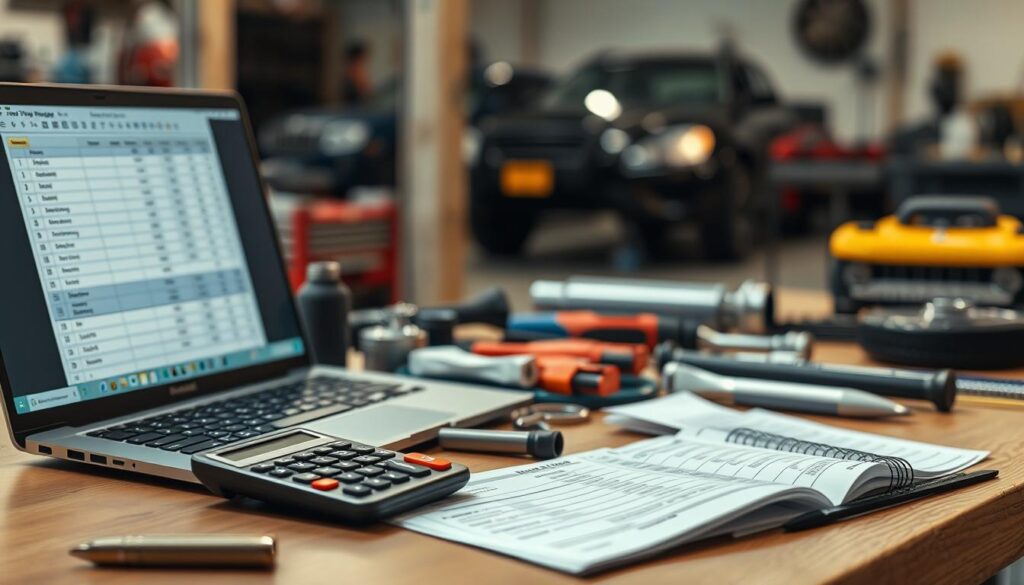
Budgeting for auto care is key to keeping your vehicle in top shape and avoiding surprise costs. By setting aside money for regular upkeep and repairs, you can keep your car running well and extend its life.
Setting Aside a Maintenance Fund
One smart way to handle auto care costs is to have a maintenance fund. This fund should cover things like oil changes, tire rotations, and brake pad replacements. This way, you won’t feel stressed when your car needs work.
To start a maintenance fund, follow these steps:
- Find out what maintenance your car needs based on its age, model, and mileage.
- Look up the average cost of routine services and repairs for your car.
- Set aside a monthly or yearly budget for car care based on your research.
Understanding Common Repair Costs
Knowing common repair costs helps you budget better for car care. Some common repairs include:
- Brake system repairs, which can cost between $100 to $500 or more, depending on the fix.
- Tire replacements, with prices ranging from $50 to $200 per tire, based on type and quality.
- Engine repairs, which can be pricey, possibly costing thousands of dollars.
By knowing these costs, you can better plan for the financial side of owning a car. This ensures you’re giving the best automotive advice for your budget.
By following these car care tips for beginners, you can handle auto care budgeting. This keeps your vehicle in great shape.
Final Thoughts on Vehicle Care
Keeping your vehicle in top shape is a big job. It needs regular checks and attention to any signs of trouble. By following the tips in this article, you can make sure your car runs well.
Establishing a Routine
Having a car care routine is key to keeping your vehicle running long. Check your tire pressure, oil, and brake pads often. This helps catch problems early.
Embracing DIY Car Care
DIY car care can save you money and make you feel proud. Simple tasks like washing and waxing, checking fluids, and changing air filters can be done at home. Try DIY car care to get more involved in your vehicle’s upkeep.
Learning about the latest auto care tips helps you make smart choices for your car. Keep learning and updating your car care routine to keep your vehicle in great shape.